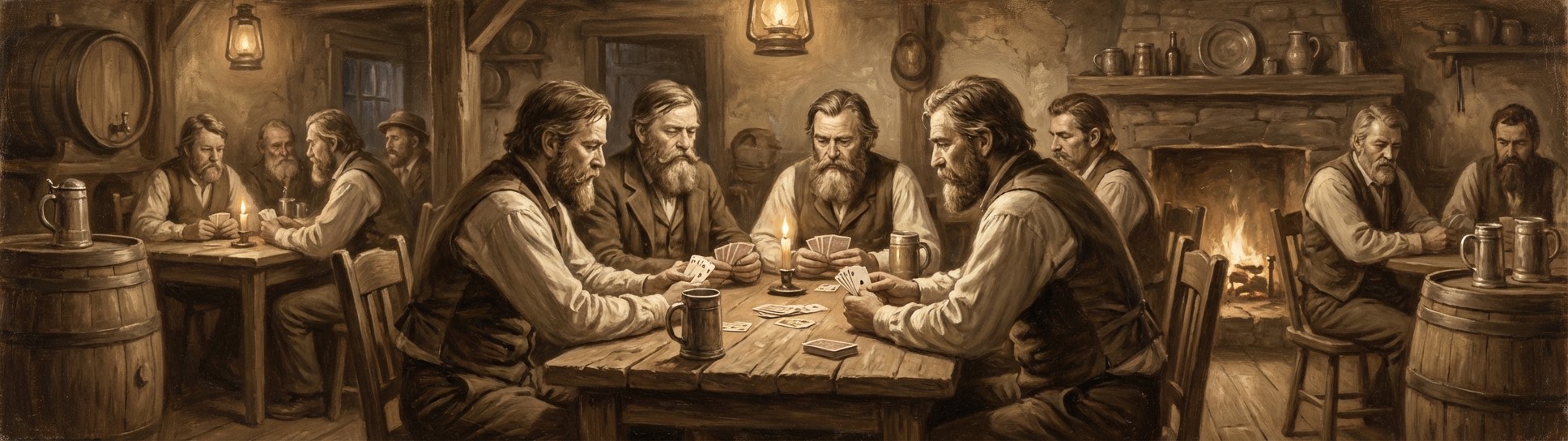
German Origins: Schafkopf
Sheepshead began as Schafkopf (literally "sheep's head") in Bavaria, Germany during the late 18th century. But why such an odd name?
The Name Mystery
The German word "Schaf" can mean "sheep," but it also refers to the flat end of a barrel. Players would traditionally sit around a barrel head (Schafkopf) to play cards. When the game came to America, the name was literally translated to "Sheepshead."
Schafkopf was primarily a "poor person's game" - a pub pastime for working-class Germans. It was simpler than the complex bidding games of the aristocracy, yet offered rich strategic depth.
Crossing the Atlantic
The Great Migration (1840s-1880s)
In the mid-19th century, millions of Germans immigrated to America, many settling in the Upper Midwest. They brought their culture, their beer, and their card games - including Schafkopf.
Milwaukee: The German Heart of America
By 1880, 27% of Milwaukee's population was German-born. The city became a stronghold of German-American culture - and Sheepshead became part of its identity.
Beer Halls and Card Tables
Milwaukee's famous Deutscher Club and countless neighborhood taverns hosted regular Sheepshead games. It became a social ritual - as important as the beer itself.
Sheepshead Timeline
Milwaukee's Official Card Game
In 1983, the city of Milwaukee officially declared Sheepshead its official card game - the only major American city to officially recognize a card game!
This wasn't just ceremonial. It reflected the game's deep roots in the city's German-American heritage and its continued importance as a social tradition.
How Sheepshead Evolved in America
As Sheepshead spread through Wisconsin, different communities developed their own house rules and traditions:
Milwaukee Style
- • Called Ace partner
- • Leasters when no one picks
- • Cracking allowed
Door County Style
- • Jack of Diamonds partner
- • "Call up" when you have J♦
- • Different scoring
Dubois County (Indiana)
- • 4-player variant
- • Different deal structure
- • Unique to German enclave
Modern Online
- • Milwaukee rules standard
- • AI opponents available
- • Global player pool
Cultural Significance
"Anyone who knows how to play sheepshead prefers it to Euchre. If you think Sheepshead is similar to Euchre, think of it like chess is similar to checkers."
- Wisconsin Sheepshead player
Sheepshead isn't just a game in Wisconsin - it's a cultural identifier. Knowing how to play marks you as a local. Teaching someone to play passes down tradition. Tournaments bring communities together.
The game has survived where many other immigrant traditions faded. While few Wisconsin residents still speak German, Sheepshead endures - played at family gatherings, in VFW halls, and now online.
Schafkopf vs American Sheepshead
While they share origins, the games have diverged:
| Aspect | German Schafkopf | American Sheepshead |
|---|---|---|
| Deck | Bavarian pattern (32 cards) | French/American (32 cards) |
| Players | Usually 4 | Usually 5 |
| Trump suit | Can vary by game type | Always Q, J, Diamonds |
| Complexity | Multiple game modes | Simplified, standardized |
| Where played | Bavaria, Germany | Wisconsin, Upper Midwest |
Sheepshead Today and Tomorrow
While Sheepshead's heartland remains Wisconsin, digital platforms are introducing the game to new players worldwide. Online play has standardized rules while preserving the strategic depth that made the game beloved.
Annual tournaments, teaching programs, and online communities are ensuring that this 200+ year old tradition continues for generations to come.